A pool cage is one of the most valuable features of a Florida home, but year-round humidity, rainfall, UV exposure, and coastal air leave screen enclosures especially vulnerable to two problems: green algae and white oxidation. Many homeowners try to solve both with high-pressure equipment and end up with torn screens, stripped paint, or accelerated oxidation instead. Soft washing — low-pressure water paired with the right cleaning solution — treats both problems at the source without putting the enclosure at risk.
This guide covers what's actually growing (or corroding) on your enclosure, why DIY pressure washing so often backfires, whether oxidation can be fully removed, and how to keep both problems from coming right back.
This article has been reviewed by James "Rusty" Lowrey, owner of Rusty's Pro Wash & Seal, using real-world experience cleaning pool cages, screen enclosures, lanais, and pool decks throughout the Greater Tampa Bay area.
What Soft Washing Actually Looks Like
These are real before-and-after results from recent soft washing projects — not stock photos. Notice the difference is in the frame and screen, not just the glare: green and black staining lifts off the aluminum and mesh without any of the pressure damage described below.
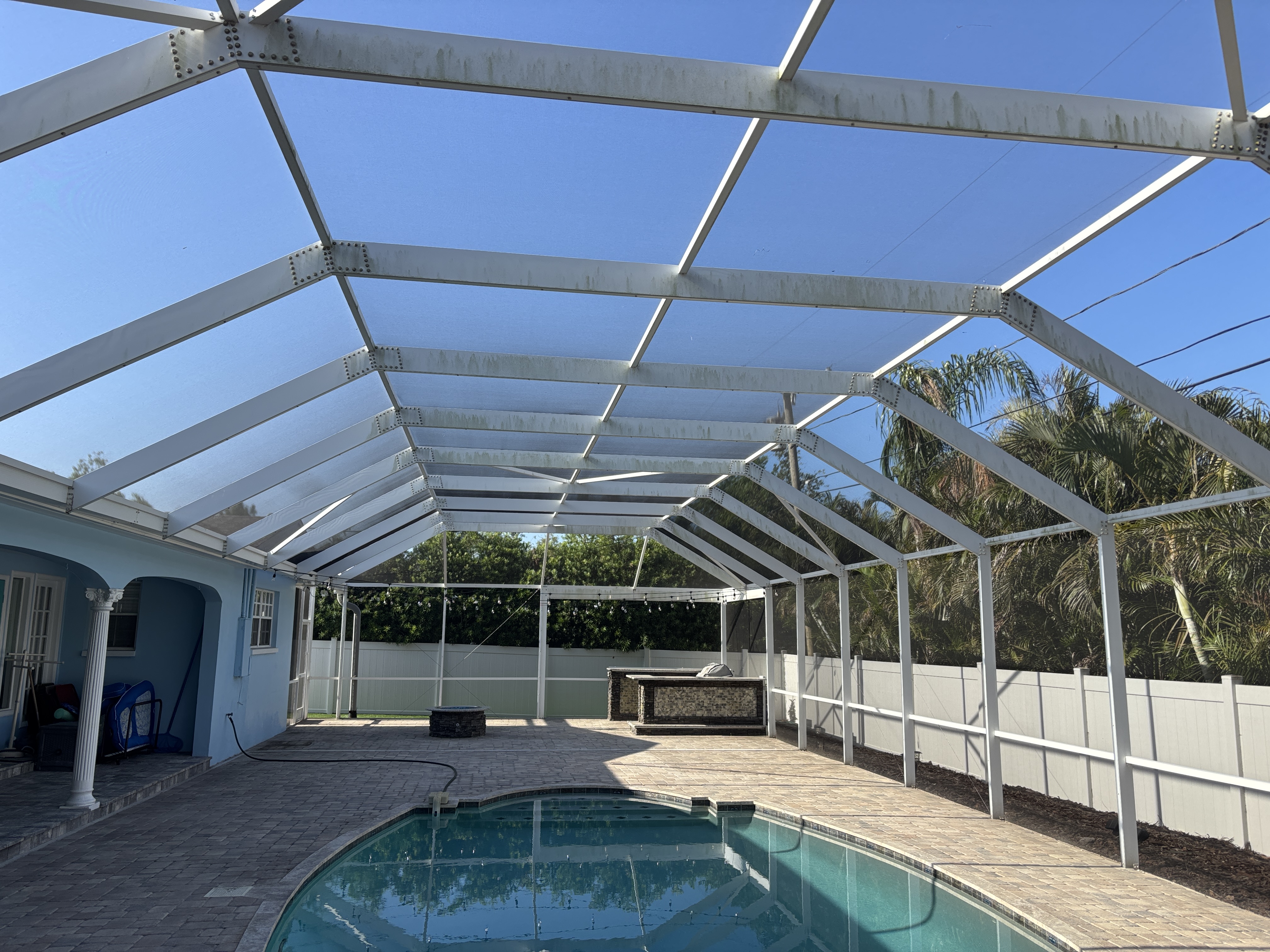
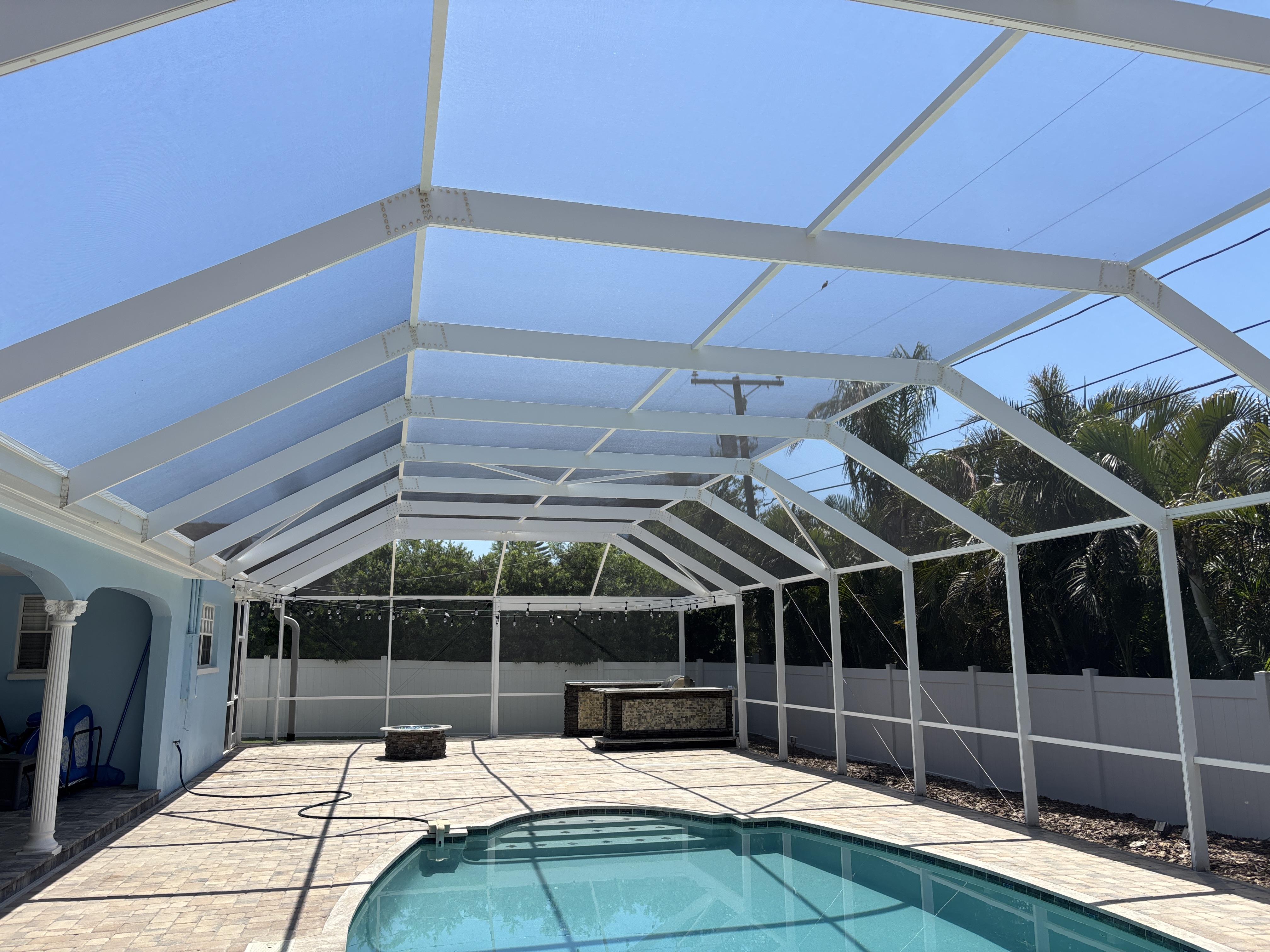
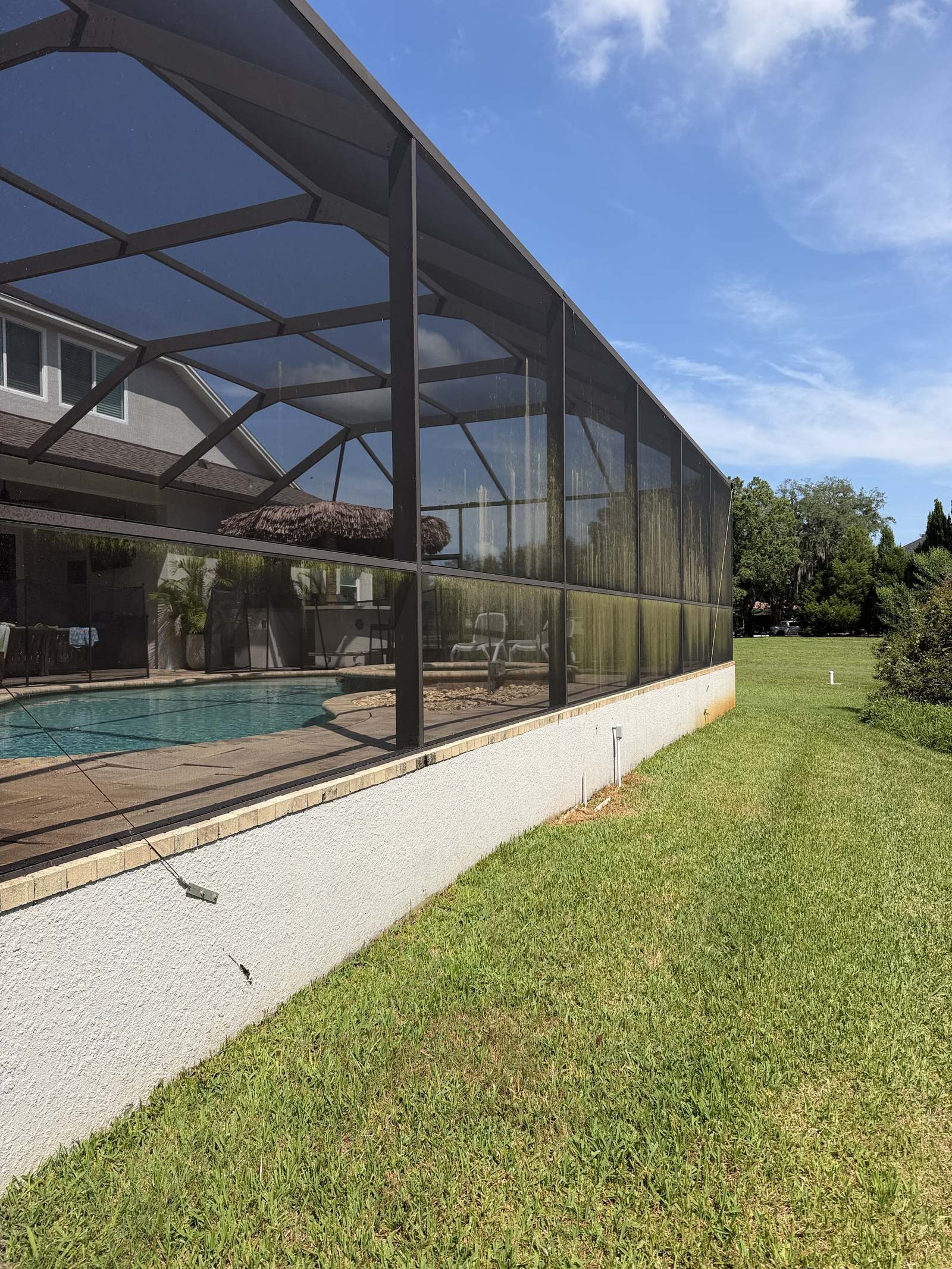
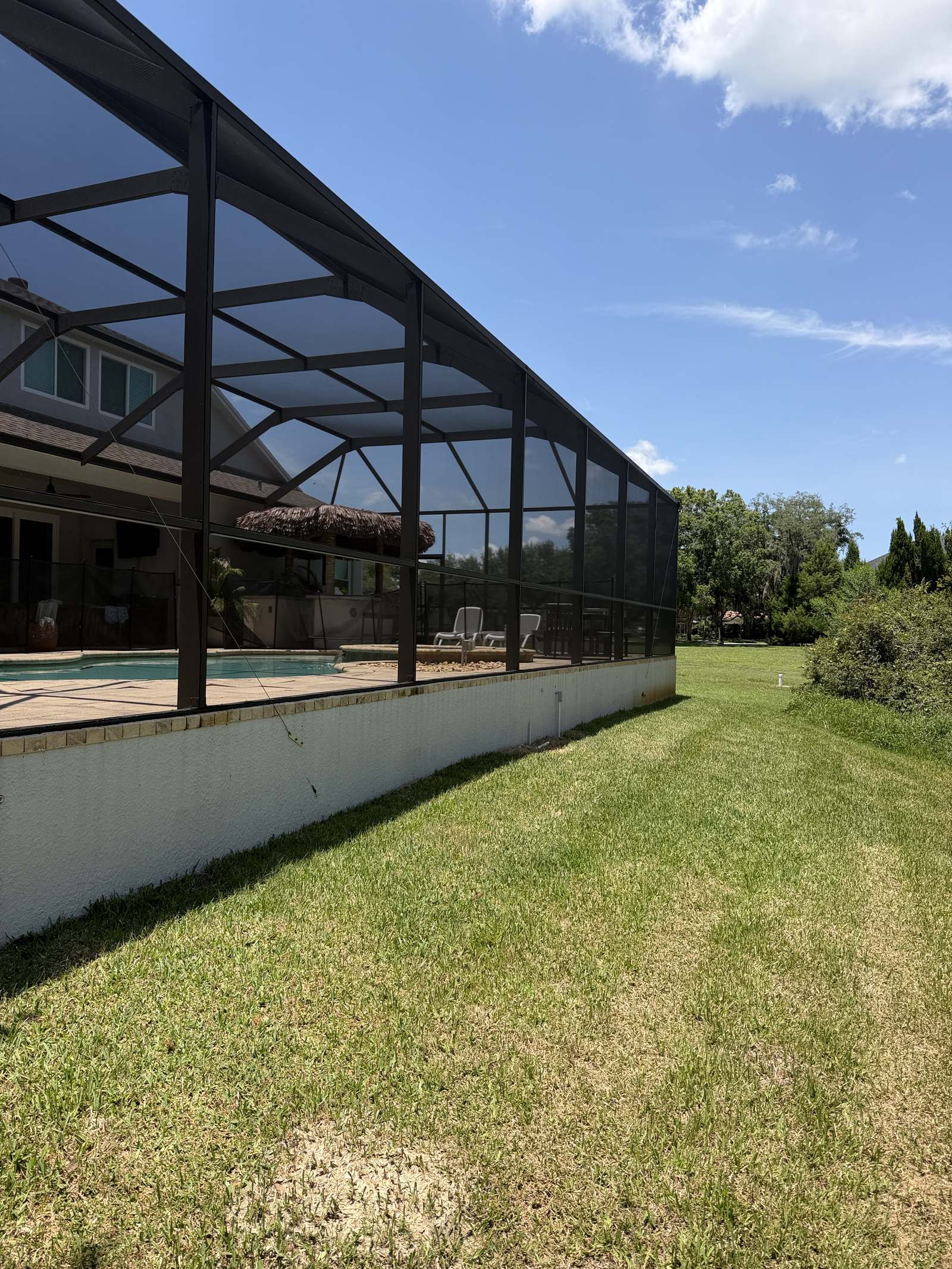
See more real projects across Tampa Bay in our full before-and-after gallery.
What Is the Green Buildup on My Pool Cage?
The green discoloration on a pool cage is usually algae, though it's often mixed with mildew, mold spores, pollen, dirt, and other airborne organic debris. Algae thrive on three things Florida provides in abundance: moisture, warm temperatures, and limited direct sunlight.
Where It Shows Up First
- Pool cage framework and supports
- Lanai ceilings and super gutters
- Screen walls and patio structures
- Shaded enclosure sections
Why North-Facing Sides Go First
North-facing enclosure sections and areas beneath tree canopies typically develop algae first, because those surfaces stay damp longer after rain and morning dew.
Why It Keeps Coming Back
Standard pressure washing often removes only the visible surface growth while microscopic spores stay embedded in the surface — so algae regrows within months unless the root source is treated, which is exactly what soft washing is designed to do.
What Causes White Oxidation on Pool Cage Frames?
Most Florida pool cages are built from aluminum because it's lightweight, strong, and rust-resistant — but it isn't immune to aging. Continued exposure to UV radiation, moisture, salt air, environmental pollutants, acid rain, and pool chemicals gradually breaks down the factory finish, and oxidation is what's left behind.
- White chalky residue on the frame
- Faded or uneven frame color
- Powdery residue that transfers to your hands
- Dull-looking aluminum
- Streaking below enclosure framing
Many homeowners mistake oxidation for dirt or hard water deposits when it's actually deterioration of the protective finish itself.
Oxidation vs. Corrosion: What's the Difference?
These terms get used interchangeably, but they aren't the same thing — and the distinction matters for what cleaning can (and can't) fix.
Oxidation
- White powder or chalky residue
- Surface-level discoloration
- Generally cosmetic
- Often improves with cleaning and restoration
Corrosion
- Pitting and surface deterioration
- Structural weakening
- Flaking metal
- Common in coastal, high salt-exposure areas
- Cleaning alone may not solve it
Why Pressure Washing Can Damage Screen Enclosures
One of the biggest mistakes homeowners make is assuming more pressure means better cleaning. Pool cage screens are built for airflow and insect protection — not concentrated high-pressure water.
Torn or Stretched Mesh
Screens tear or stretch out of shape under direct pressure.
Broken Spline
The retention system holding screens in place can fail.
Bent Framing
Screen supports and hardware can warp under force.
Water Intrusion
High pressure can drive water into joints and fasteners.
Premature Paint Failure
Painted aluminum finishes can strip or fail early.
Rippling or Loose Screens
A telltale sign the enclosure was over-pressured.
In severe cases, homeowners end up paying for costly screen replacement after an aggressive DIY cleaning attempt — repairs that a properly soft-washed enclosure would never have needed.
The Safest Cleaning Method: Soft Washing
Soft washing uses low-pressure water combined with specialized cleaning solutions to remove biological growth and surface contaminants — prioritizing cleaning power over force.
- Kills algae at the source, not just the surface
- Removes mildew and mold growth
- Reduces oxidation buildup
- Protects delicate screen mesh
- Preserves painted finishes
- Prevents water intrusion
- Produces longer-lasting results
- Reduces the risk of expensive repairs
For most pool cages, a properly performed soft wash delivers a better result than pressure washing while minimizing the chance of damage — see our full comparison of soft washing vs. pressure washing.
DIY vs. Professional Pool Cage Cleaning
Homeowners can rinse a pool cage themselves, but "can" and "should" aren't the same question. Here's how the two approaches actually compare:
| Factor | DIY Cleaning | Professional Soft Washing |
|---|---|---|
| Upfront Cost | Lower — limited to equipment or rental | Higher — but includes labor, solution, and insurance |
| Risk to Screens & Framing | Higher — consumer pressure washers are easy to overuse on mesh | Lower — screen-safe pressure and cleaning solutions |
| Equipment Needed | Pressure washer, ladder, chemicals, PPE | Provided by the crew |
| Results on Algae & Oxidation | Variable — often removes surface growth only | Consistent — treats algae at the root and reduces oxidation buildup |
| Time & Labor | Your weekend | None — scheduled and completed by the crew |
If your pool cage only needs light rinsing between professional visits, a garden hose is usually enough. Once algae, mildew, or oxidation are visibly established, professional soft washing is worth the cost difference — it's typically the cheaper option once you factor in the price of a torn screen panel or a bent frame member.
Can White Oxidation Be Completely Removed?
It depends on how advanced the oxidation has become.
| Severity | What to Expect |
|---|---|
| Light Oxidation | Cleans relatively well and often restores much of the original appearance. |
| Moderate Oxidation | Improves significantly with professional cleaning, though some discoloration may remain — restoration treatments can help. |
| Severe Oxidation | May indicate finish failure or extensive UV damage. Repainting or refinishing may be required to fully restore appearance. |
A professional assessment is often the best way to determine which category your enclosure falls into before committing to a cleaning or restoration plan.
Warning Signs of Structural Damage: When Cleaning Isn't Enough
Cleaning solves algae, oxidation, and staining — but it can't fix a compromised structure. Before scheduling a routine cleaning, walk your enclosure and look for these signs. If you spot any, a repair inspection should come before (or instead of) a wash.
Loose Fasteners
Screws or rivets backing out of framing joints can indicate movement or age-related wear.
Bent Framing
Warped beams or supports are often a sign of storm impact or prior over-pressurized cleaning.
Corrosion Pits
Small pitted spots in the aluminum go beyond surface oxidation and point to true corrosion.
Structural Sagging
A roofline or panel that visibly sags can signal a failing support member.
Damaged Screen Attachments
Spline pulling loose from the track lets screens flap and tear further over time.
If any of these apply to your enclosure, mention it when you request an estimate — our pool cage cleaning visits include a quick structural check so we can flag issues that cleaning alone won't resolve.
How Often Should Pool Cages Be Cleaned in Florida?
| Location Type | Recommended Frequency |
|---|---|
| Inland Florida Homes | Every 12 months |
| Coastal Florida Homes | Every 6 to 12 months — salt exposure accelerates oxidation and biological growth |
| Near Trees or Conservation Areas | Every 6 to 9 months — heavy shade and organic debris increase algae growth |
How to Prevent Green Algae from Returning
No cleaning lasts forever, but homeowners can slow regrowth between services:
- Trim overhanging trees
- Improve sunlight exposure where possible
- Clean gutters regularly
- Remove debris from enclosure roofs
- Wash off seasonal pollen buildup
- Address drainage issues
- Schedule preventative maintenance cleanings
Consistent maintenance is significantly easier and less expensive than waiting until heavy buildup develops. And because algae, mold spores, and debris move between surfaces through rainfall, wind, and foot traffic, most homeowners get the best results by cleaning the pool cage alongside the pool deck, lanai, and super gutters at the same time. The same algae and organic buildup driving stains on your screen enclosure is usually visible on the roofline and exterior walls too — pairing a pool cage cleaning with roof washing and house soft washing keeps the whole exterior on the same maintenance schedule instead of leaving contaminants free to spread right back onto a freshly cleaned enclosure.
Common Pool Cage Stains and What Causes Them
Not every stain on a screen enclosure is algae or oxidation. Color is usually the fastest way to narrow down the cause:
| Stain Color | Most Common Cause |
|---|---|
| Green | Algae and organic growth |
| Black | Mold, mildew, and airborne pollutants |
| White Chalky Residue | Aluminum oxidation |
| Brown | Tannins from leaves and organic debris |
| Orange | Rust runoff or metal contamination |
| Gray | Dirt, dust, and environmental buildup |
Because several of these causes can overlap on the same enclosure, a soft wash treatment is usually the safest way to address multiple stain types at once without guessing at the cause first.
Frequently Asked Questions
What is the green stuff growing on my pool cage?
The green buildup is typically algae, although it can also contain mold, mildew, pollen, and organic debris. Florida's warm temperatures, humidity, and frequent rainfall create ideal conditions for algae growth, especially on shaded sections of screen enclosures.
Is green algae on a pool cage harmful?
While algae itself is usually not dangerous, it can create slippery surfaces on nearby decks and patios and make your pool enclosure look neglected. Left untreated, algae can continue spreading and become much more difficult to remove.
What causes the white chalky residue on my pool cage frame?
The white powdery residue is usually aluminum oxidation. Over time, exposure to UV rays, moisture, salt air, and environmental pollutants causes the protective finish on aluminum frames to break down, leaving behind a chalk-like surface.
Can white oxidation be completely removed?
Light oxidation can often be greatly reduced through professional cleaning and restoration techniques. Severe oxidation may indicate permanent coating failure, requiring refinishing, repainting, or restoration to fully improve the appearance.
Can I pressure wash my pool cage myself?
Pool cages should be cleaned with extreme caution. Excessive pressure can tear screen mesh, loosen spline, bend framing components, and strip painted finishes — see DIY vs. professional screen enclosure cleaning for a full breakdown. Low-pressure soft washing is generally the safest approach.
How often should a pool cage be professionally cleaned?
Most Florida homeowners benefit from pool cage cleaning every 6 to 12 months. Homes near the coast, surrounded by trees, or in high-humidity areas may need more frequent cleaning to control algae growth and oxidation buildup — see our full cleaning schedule guide.
Does salt air damage pool cages?
Yes. Coastal environments expose aluminum pool cages to airborne salt particles that can accelerate oxidation, fading, and deterioration of protective coatings. Homes near the Gulf Coast often need more frequent maintenance than inland properties.
What's the difference between algae, mold, and mildew on a screen enclosure?
Algae is typically green and grows on damp exterior surfaces exposed to moisture. Mold often appears as dark spots and can penetrate porous materials. Mildew is usually gray or white and develops in humid areas. Many pool cages contain a combination of all three.
How long does pool cage cleaning last?
Results vary depending on weather conditions, nearby vegetation, shade, and coastal exposure. Most professionally cleaned pool cages stay noticeably cleaner for 6 to 12 months, though heavily shaded areas may regrow faster.
Should I clean my pool deck and lanai at the same time as my pool cage?
Yes. Algae, mold spores, dirt, and debris transfer between your pool cage, lanai, gutters, and pool deck. Cleaning all surrounding surfaces together creates a more uniform appearance and extends overall cleanliness.
Why are my pool cage screens turning black?
Black staining is commonly caused by mold, mildew, airborne pollutants, tree debris, algae buildup, or accumulated organic matter. Shaded, damp areas are particularly vulnerable, but many stains can be significantly improved with proper soft washing.
Can pool cage cleaning damage landscaping?
It can, if improper cleaning solutions are used or plants aren't protected. Professional cleaning includes pre-rinsing vegetation, diluting runoff, and thoroughly rinsing surrounding landscaping to minimize risk.
How much does pool cage cleaning cost in Florida?
Cost varies based on enclosure size, height, amount of algae buildup, oxidation severity, accessibility, and any additional services requested. Larger or heavily oxidized cages typically require more labor and time. See our pool cage cleaning packages and pricing for transparent starting rates, or request a free estimate for your specific property.
Is soft washing better than pressure washing for pool cages?
In most cases, yes. Soft washing relies on specialized cleaning solutions and low-pressure application, which lowers the risk of screen damage while removing algae and mildew more effectively than high pressure alone.
Can an oxidized aluminum pool cage be restored without painting?
Mild to moderate oxidation can often be improved through specialized cleaning and restoration. Severe oxidation may indicate deterioration of the factory finish, in which case repainting may be the better long-term solution.
Does homeowners insurance cover pool cage restoration?
Routine cleaning, oxidation removal, and maintenance are generally homeowner responsibilities and not covered by insurance. Damage from a covered event such as a hurricane or falling tree may qualify for coverage under some policies — check with your provider for specifics.
What are the signs that my pool cage needs professional cleaning?
Common indicators include green algae on frames or screens, white oxidation on aluminum, black streaks, mold or mildew buildup, chalky residue, and reduced curb appeal. Addressing these early can prevent more extensive restoration later.
How can I prevent algae from growing on my pool cage?
Trim nearby trees, improve sun exposure, clean gutters regularly, remove debris from the enclosure roof, address standing water, and schedule routine maintenance cleanings to keep algae under control between services.
Why does my pool cage look dirty again so quickly?
Rapid regrowth typically happens near wooded areas, lakes, retention ponds, or coastal environments. If algae spores aren't fully treated during cleaning, visible growth can return sooner than expected.
Can pool cage cleaning improve home value and curb appeal?
Yes. Removing algae, oxidation, dirt, and stains restores a well-maintained appearance that improves curb appeal, enhances enjoyment of the pool area, and can create a more favorable impression for prospective buyers.
Can oxidation damage my pool cage if I ignore it?
Mild oxidation is often cosmetic, but severe oxidation can indicate deterioration of the protective coating on the aluminum frame. If left untreated for years, oxidation may contribute to fading, finish failure, and increased vulnerability to corrosion, especially in coastal Florida environments.
When should a pool cage be cleaned instead of repainted?
Cleaning is usually appropriate when algae, dirt, mildew, or light oxidation are the primary issues. If the aluminum finish is heavily faded, peeling, severely oxidized, or uneven in color, repainting or restoration may provide better long-term results. A professional inspection can help determine the most cost-effective option.
Why does my pool cage get dirtier faster than my neighbor's?
Several factors affect how quickly contamination accumulates, including proximity to trees, shade levels, nearby retention ponds or lakes, coastal salt exposure, airflow patterns, pollen-producing vegetation, and roof runoff locations. Two homes in the same neighborhood can have dramatically different cleaning needs based on these environmental factors.
The Bottom Line
Green algae and white oxidation are two of the most common issues affecting Florida pool cages, and both problems tend to get worse — not better — when homeowners reach for high-pressure equipment. The safer path is identifying the source of the staining, using cleaning methods built specifically for aluminum screen enclosures, and staying on a regular maintenance schedule.
The bottom line: whether your home needs pool cage cleaning in Tampa, Brandon, Clearwater, Largo, Lutz, or St. Petersburg, soft washing remains one of the most effective ways to remove algae, reduce oxidation, protect screen mesh, and extend the life of your enclosure investment.
Reviewed by James "Rusty" Lowrey, Owner of Rusty's Pro Wash & Seal. Serving homeowners throughout Pinellas, Hillsborough, Pasco, and Manatee Counties.